Africa Blockchain Festival
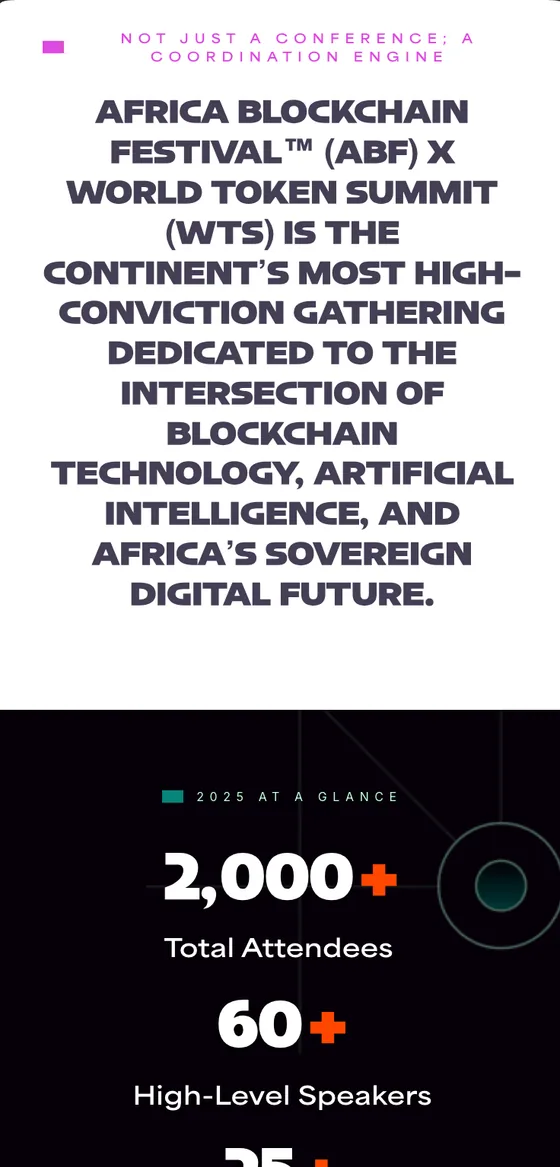
Africa Blockchain Festival brings policymakers, investors, founders and developers together in Nairobi. I designed and built the public website for the 2025 edition, then returned for 2026. The site supports ticket sales, sponsorship outreach and the event team’s day-to-day publishing.
- Services
- Web Design
- Product Design
- WordPress Development
- Full-stack Development
- Client
- Africa Blockchain Festival · World Token Summit
Nairobi, Kenya - Built with
- Figma
- WordPress
- Next.js
- TypeScript
- Supabase
- Year
- 2025–2026
- ~$100K
- in sponsorship reported by the organisers for the 2025 edition
- 2 editions
- designed and built: 2025, then retained for 2026
- 3 languages
- English, French and Swahili, from one set of templates
• Approach
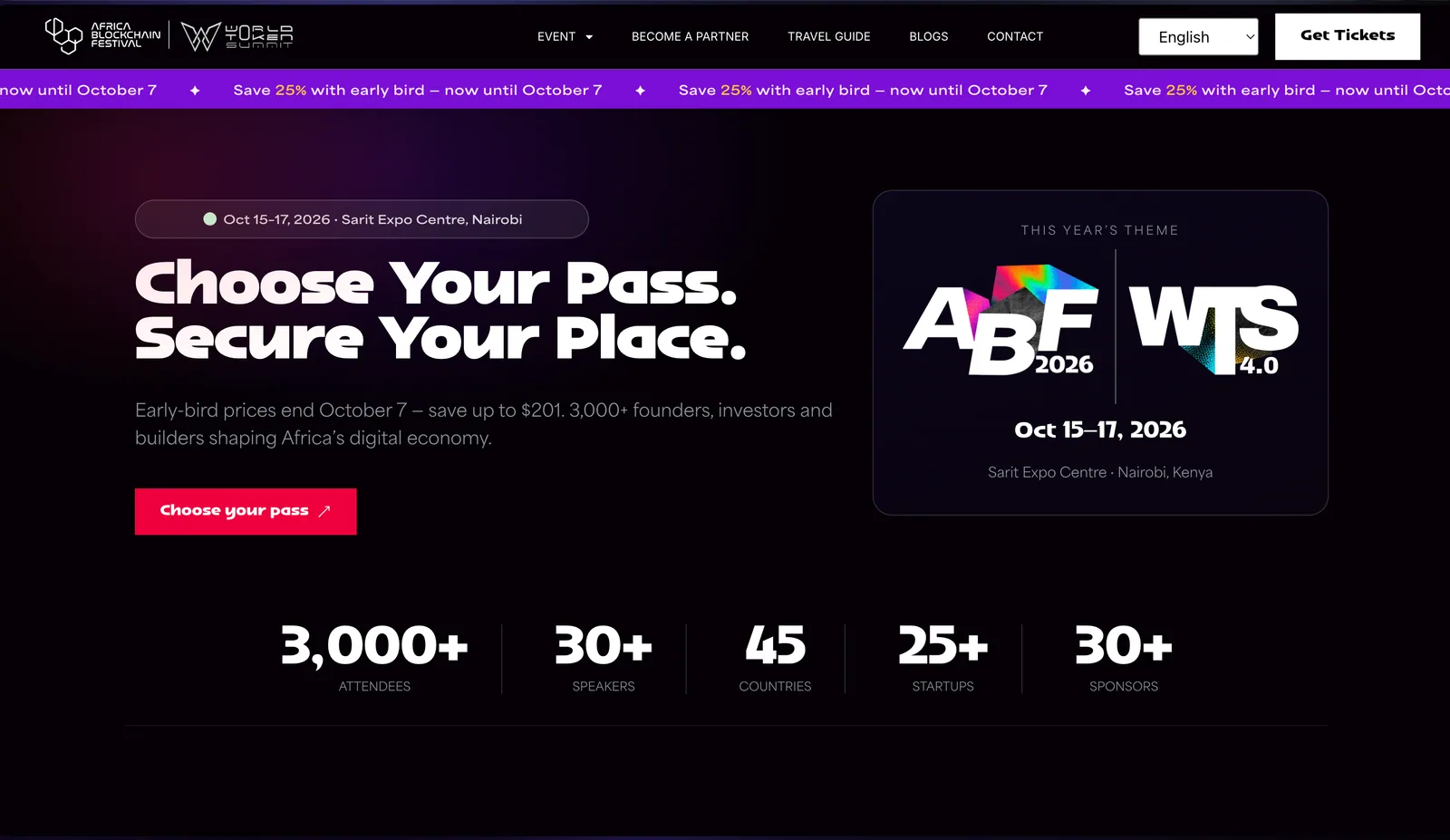
The launch date could not move, so I completed the page structure, responsive layouts and important states in Figma before development began. That gave the team a clear view of the site early and reduced changes during the build.
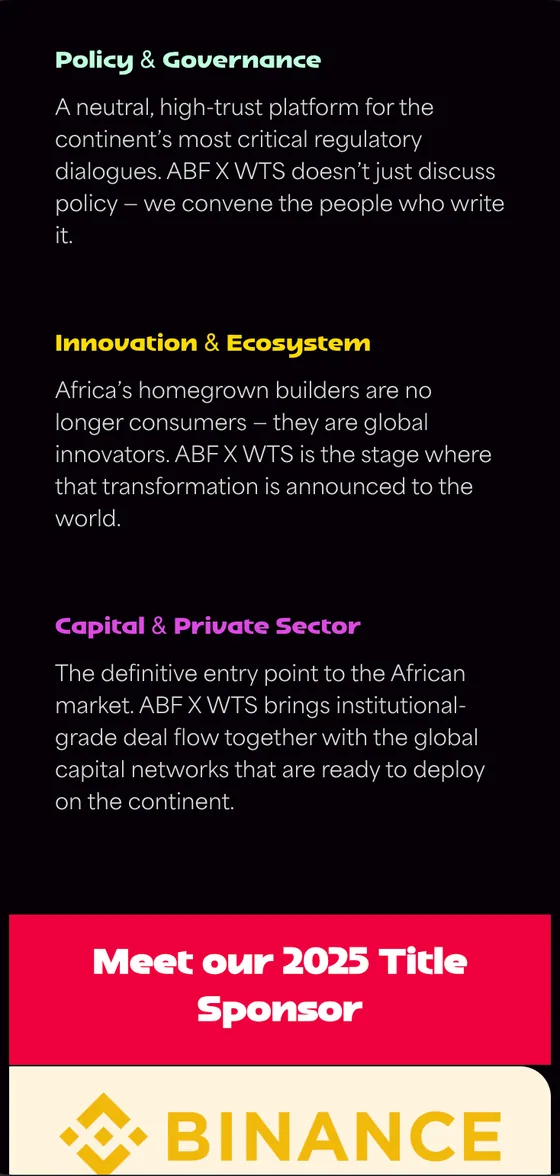
Sponsors and attendees needed different information. The sponsor route focuses on audience, previous partners and commercial opportunities. The ticket route focuses on the programme, access levels, travel and payment. Both routes remain visible without competing for the same call to action.
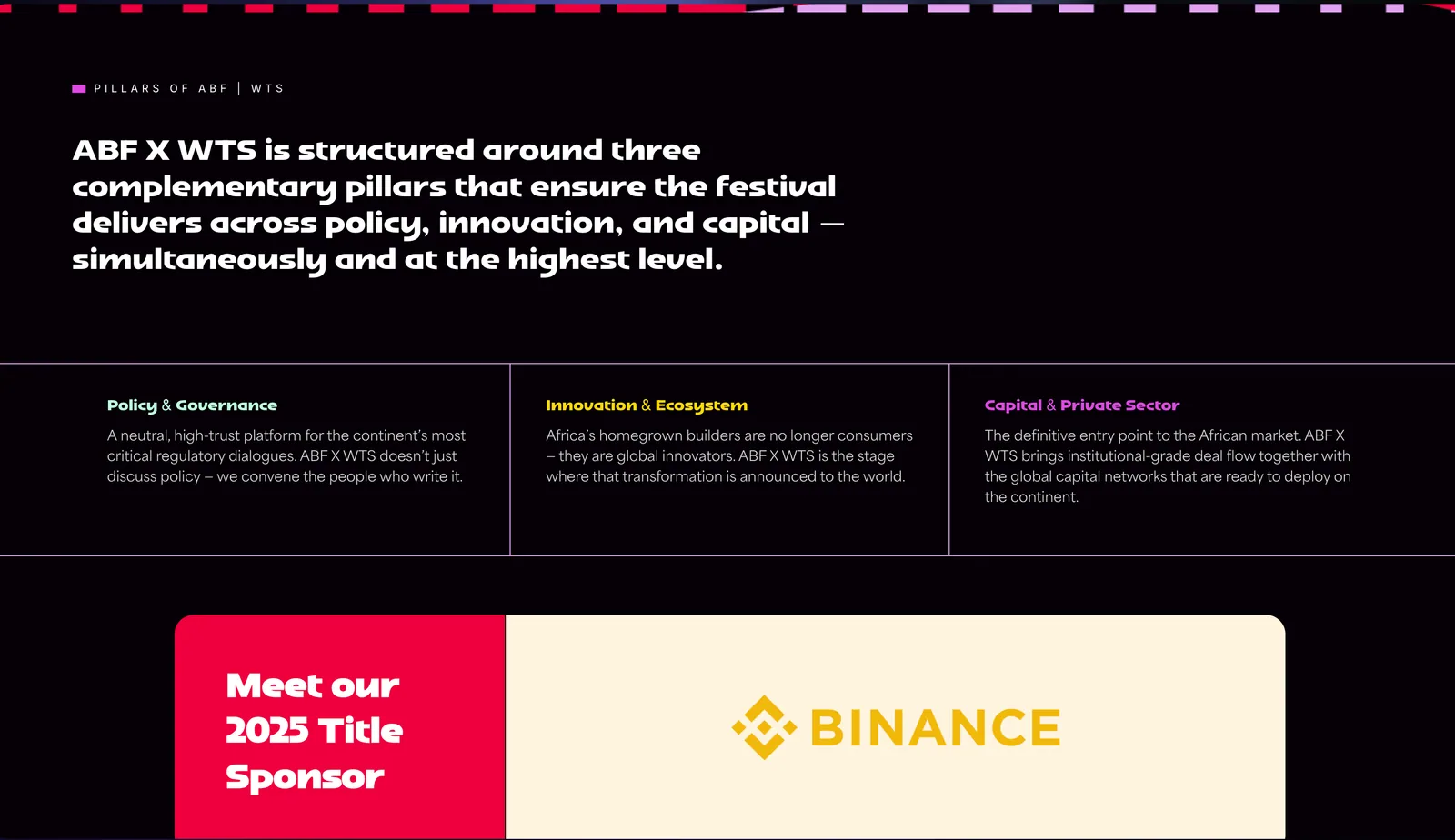
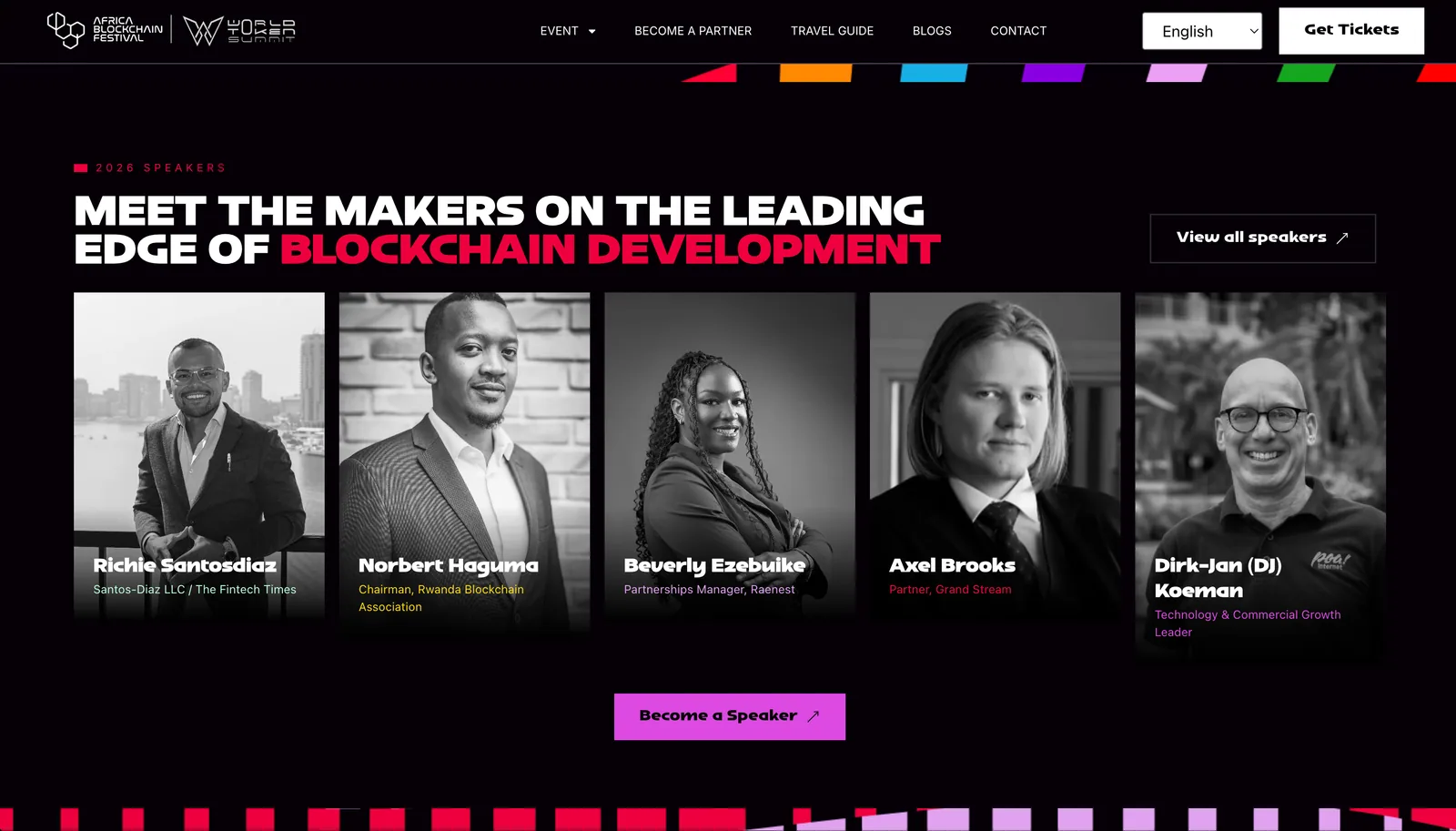
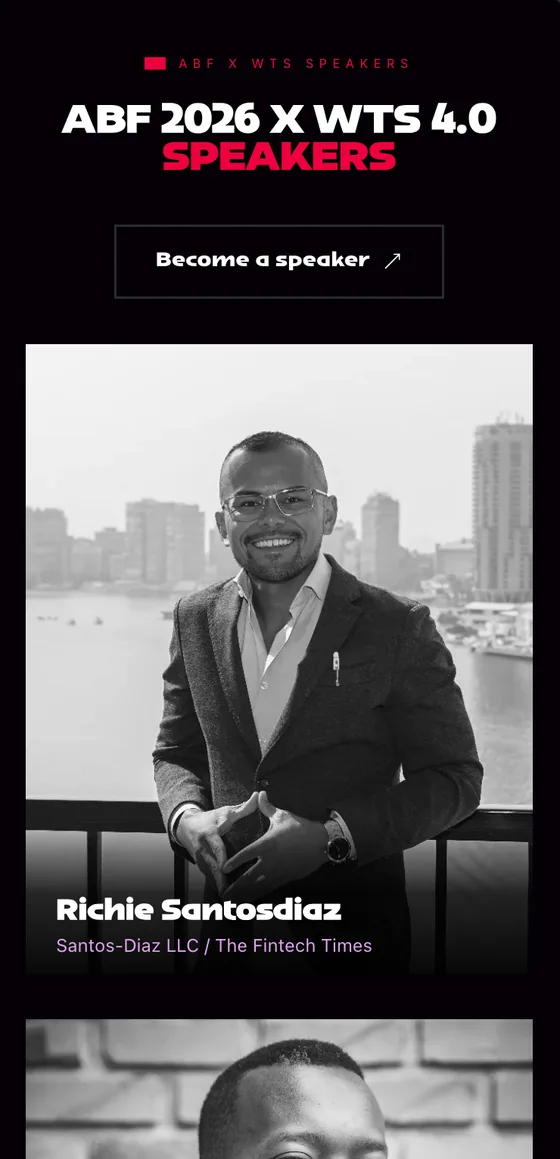
I built the main site in WordPress around the festival’s content. The team can update speakers, sponsors, ticket tiers, travel information and translations without editing templates.
• The ticketing flow
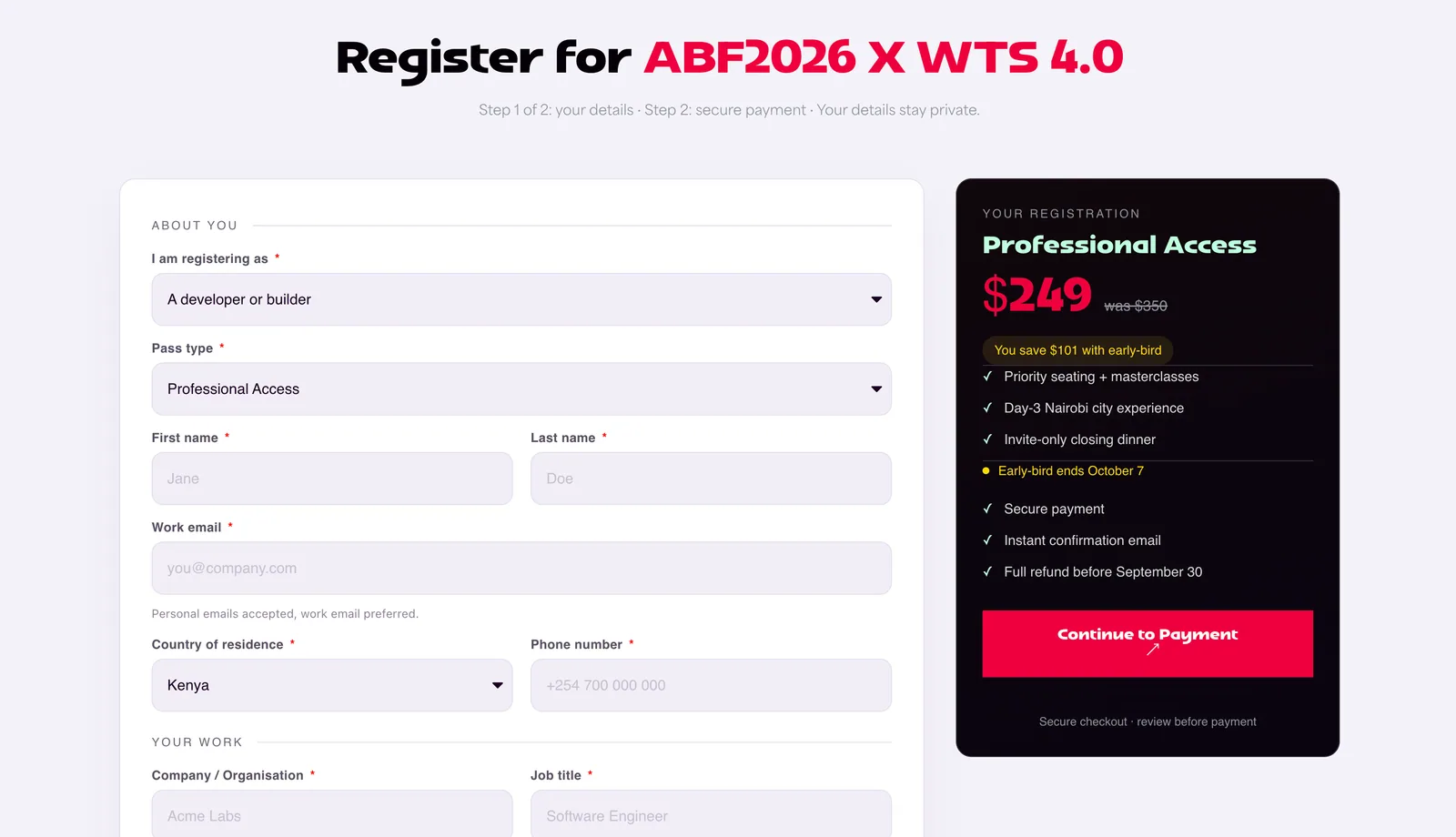
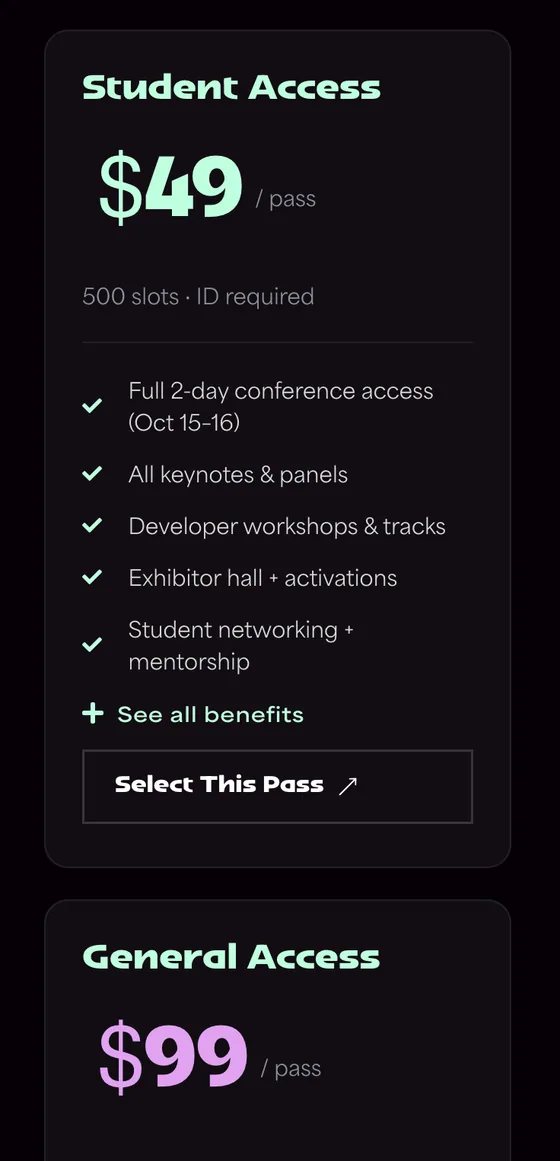
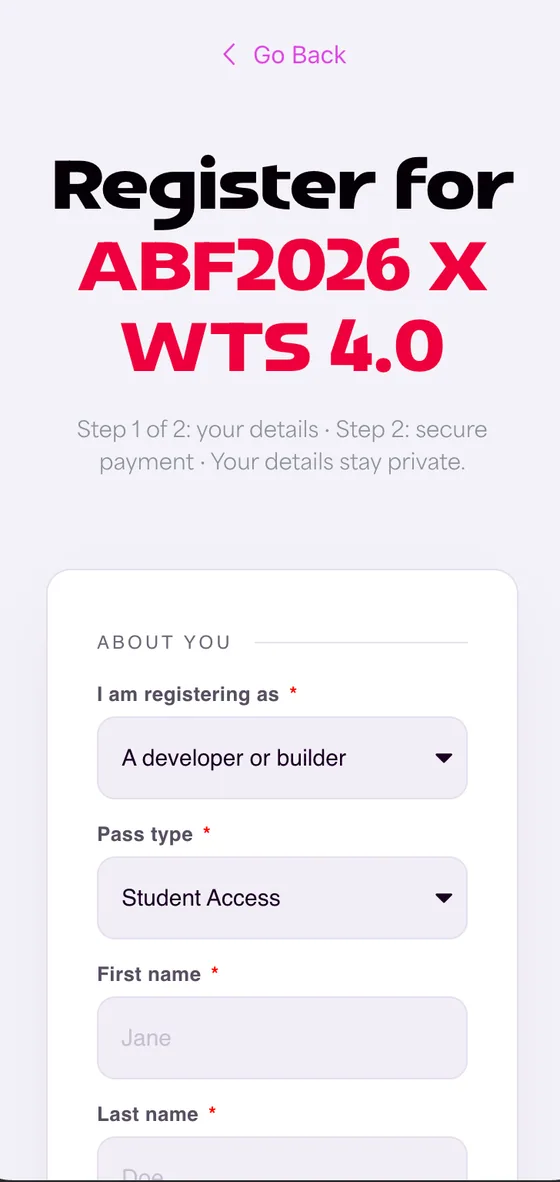
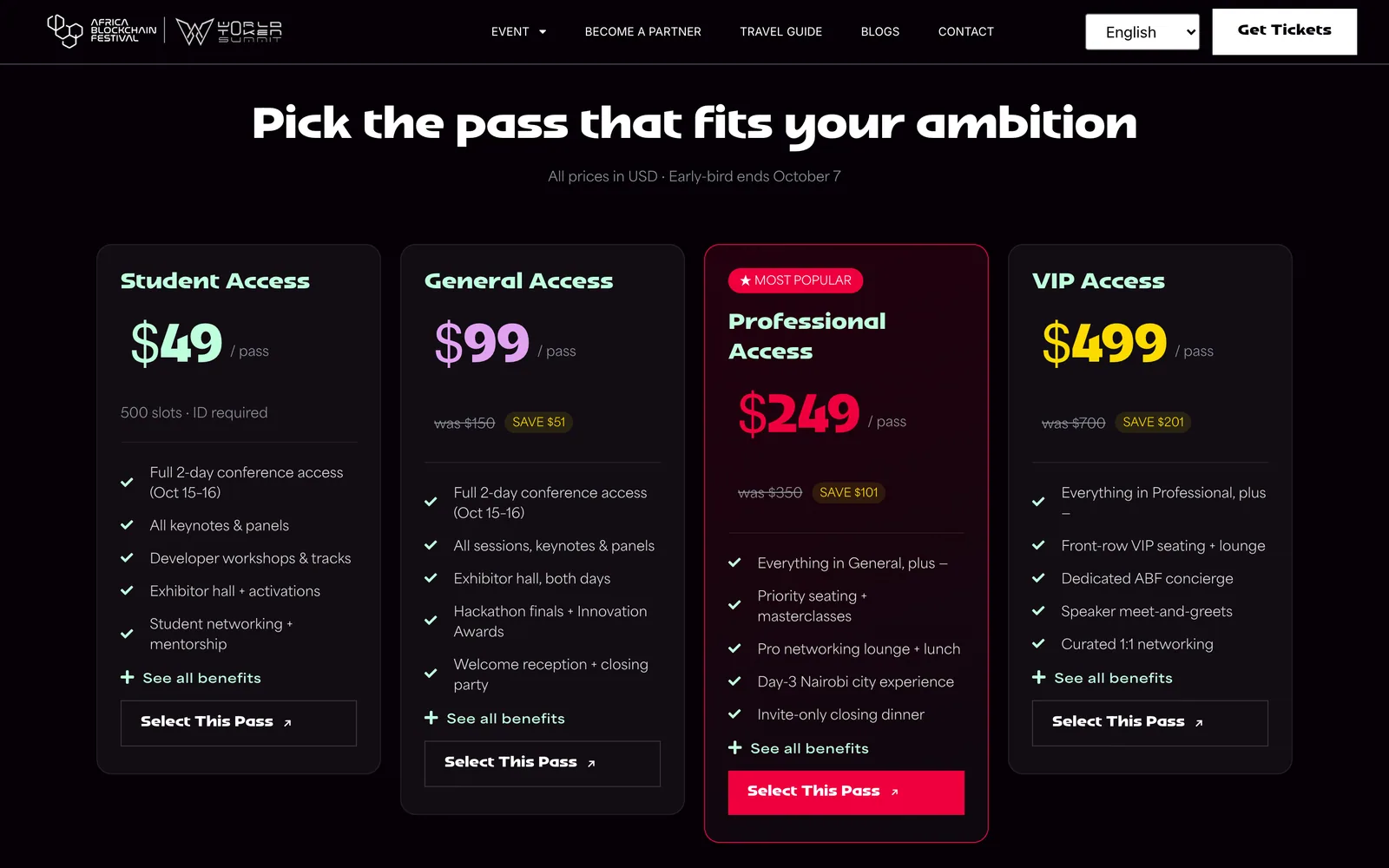
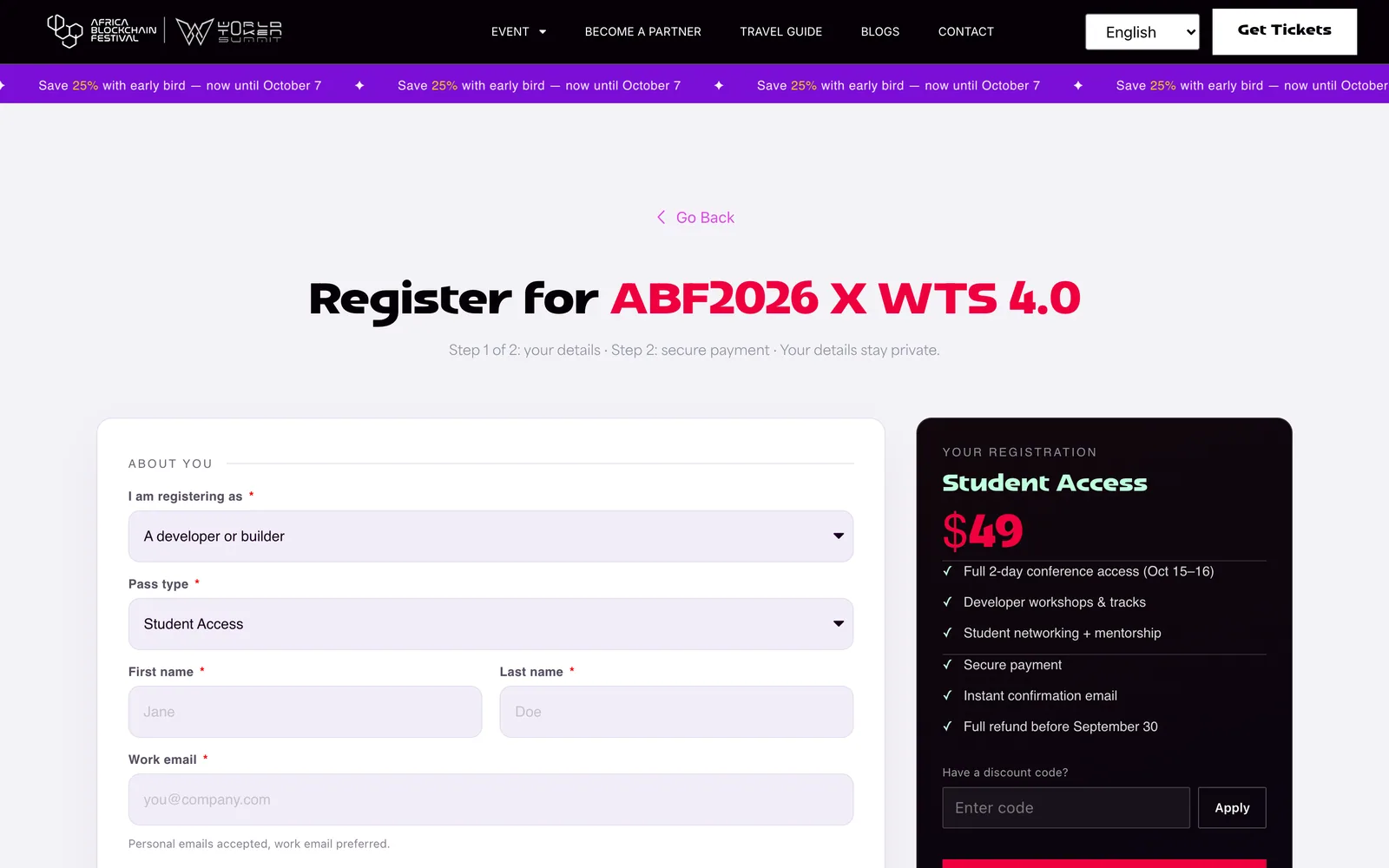
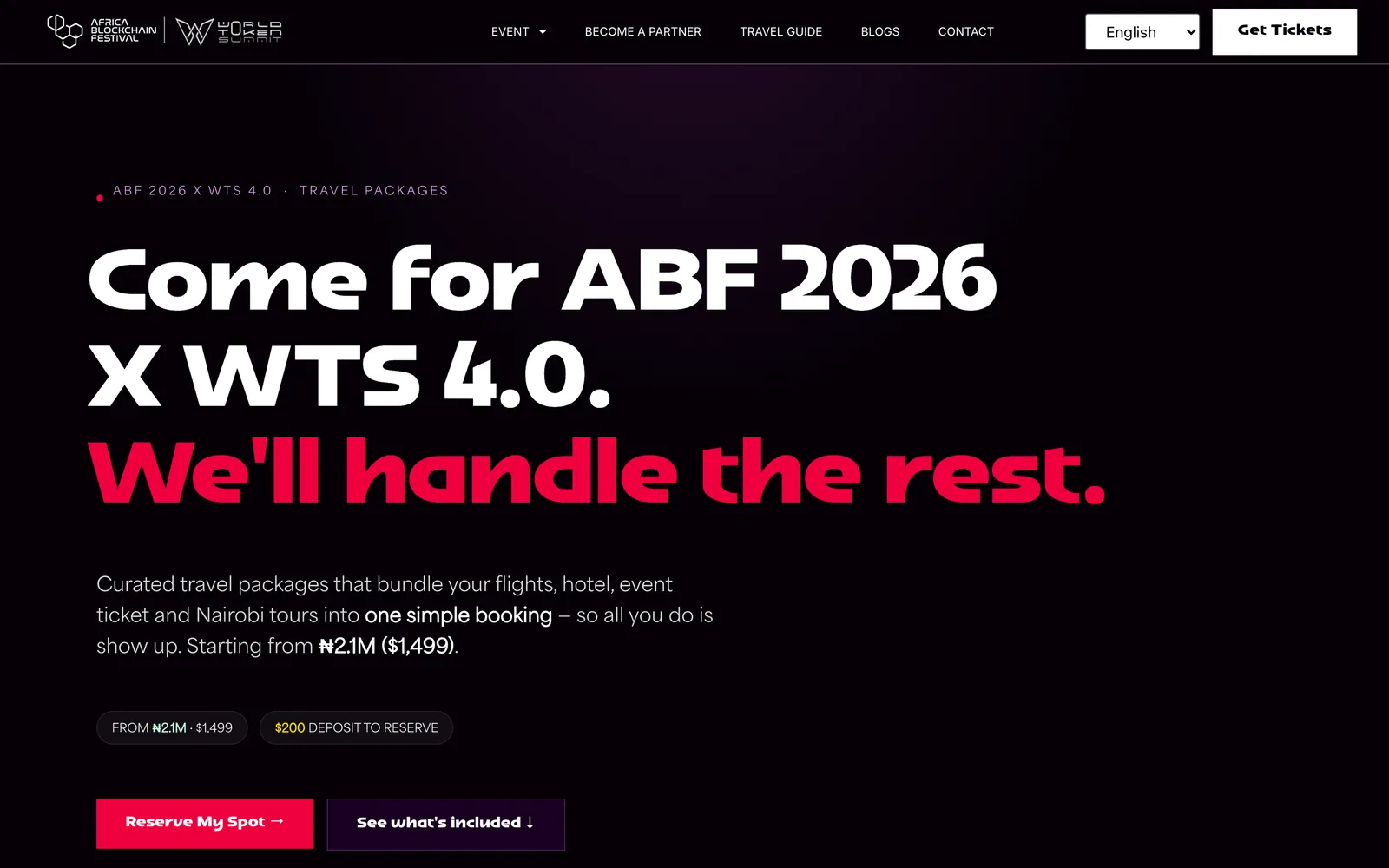
The ticket journey covers selection, registration, payment and travel. I planned the sequence before designing the screens, then kept the calls to action and page states consistent from one step to the next.
Passes are presented by level of access, which makes the difference between workshop, general and VIP options easier to compare. One recommended option is visually prominent, while sponsorship remains available as a separate route.
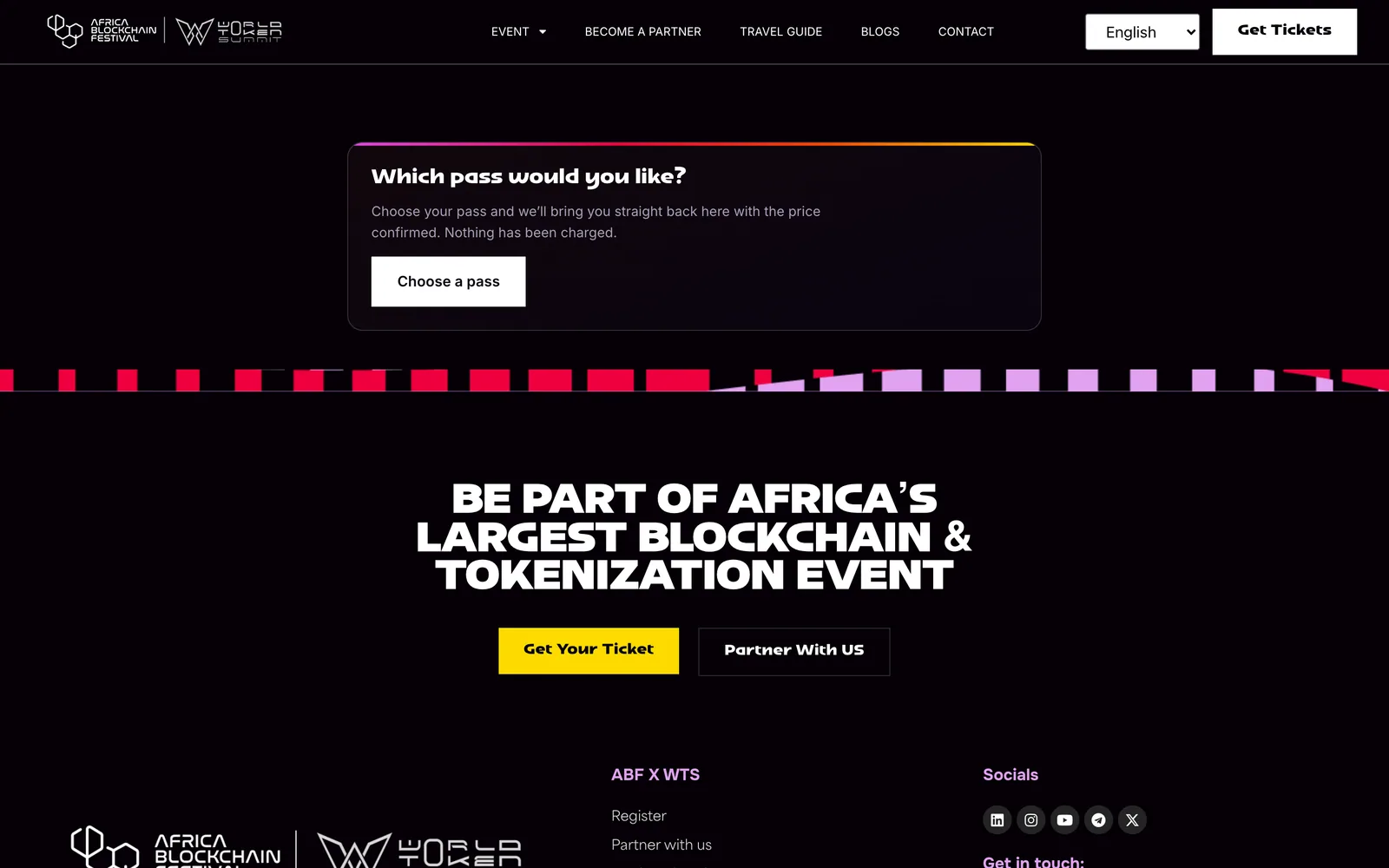
The payment page also handles the case where someone arrives without choosing a pass. It explains that no charge has been made and sends the visitor back to ticket selection instead of leaving them at an error.
• The admin behind it
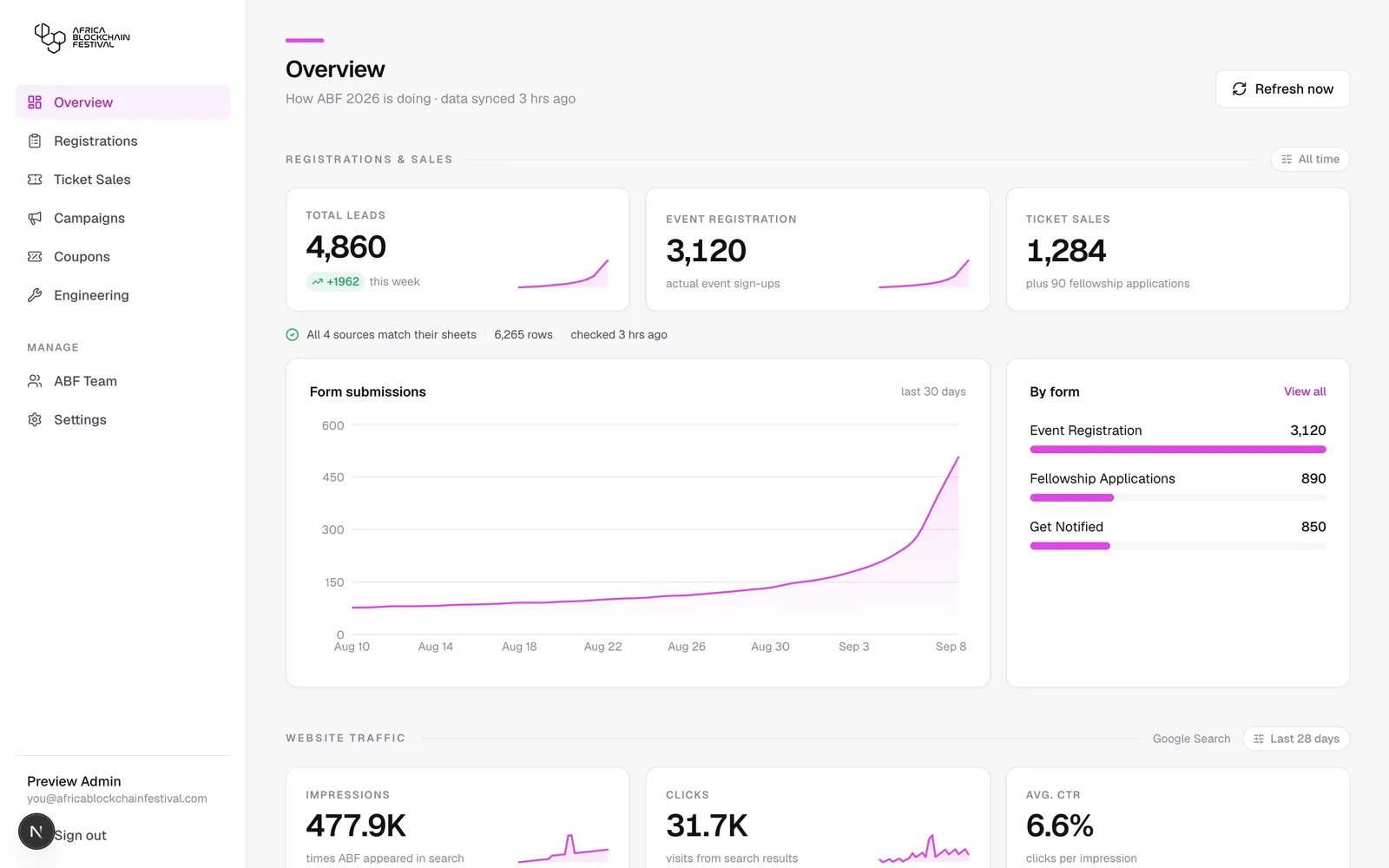
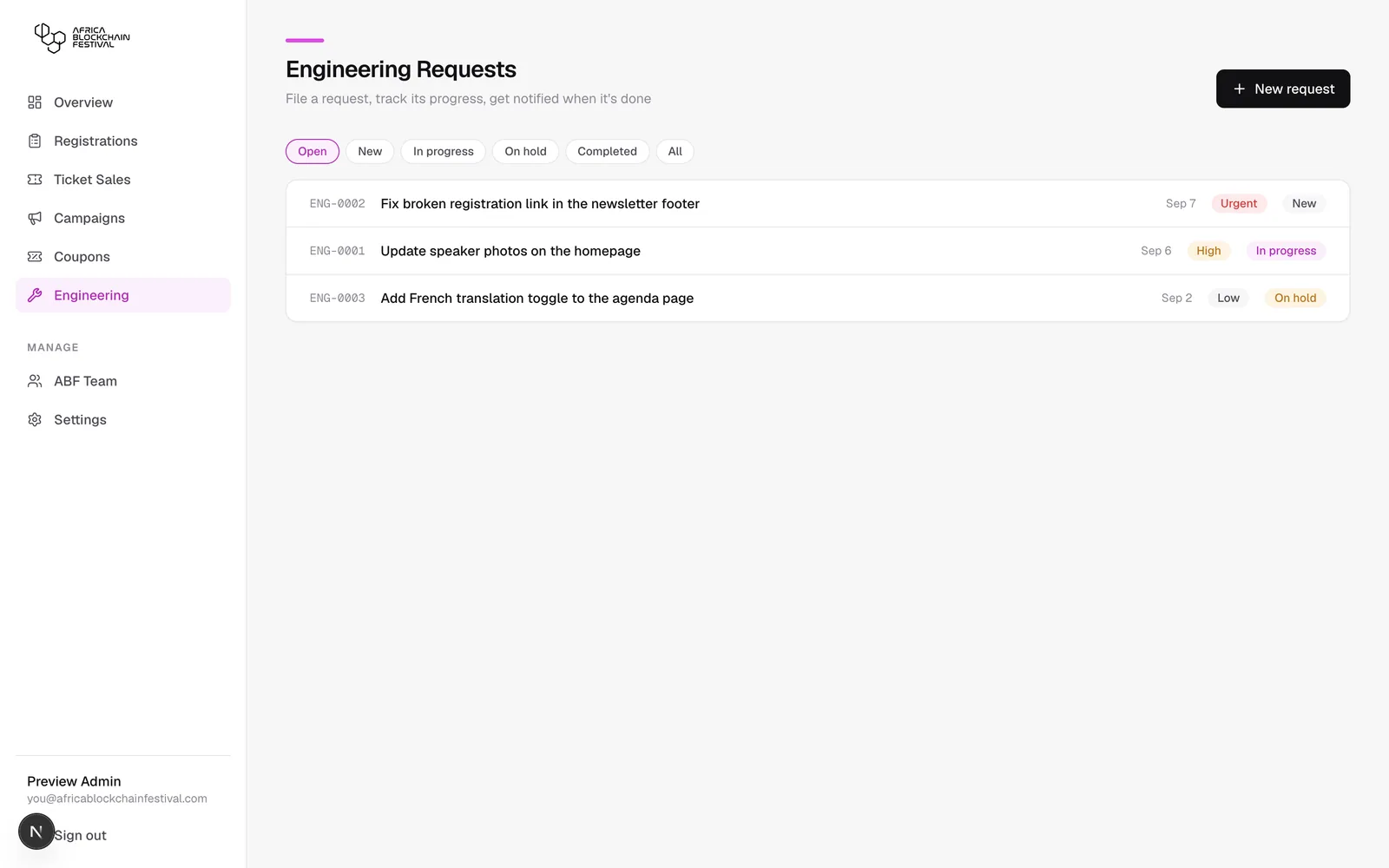
I also built a separate event dashboard with Next.js, TypeScript and Supabase. It brings registrations, payment data, campaign links, coupons and engineering requests into one place for the event team.
Google Sheets remains the team’s source of truth. The dashboard synchronises those records and shows whether each source is up to date. Edited rows update, deleted rows are retained as inactive records and restored rows are not duplicated.
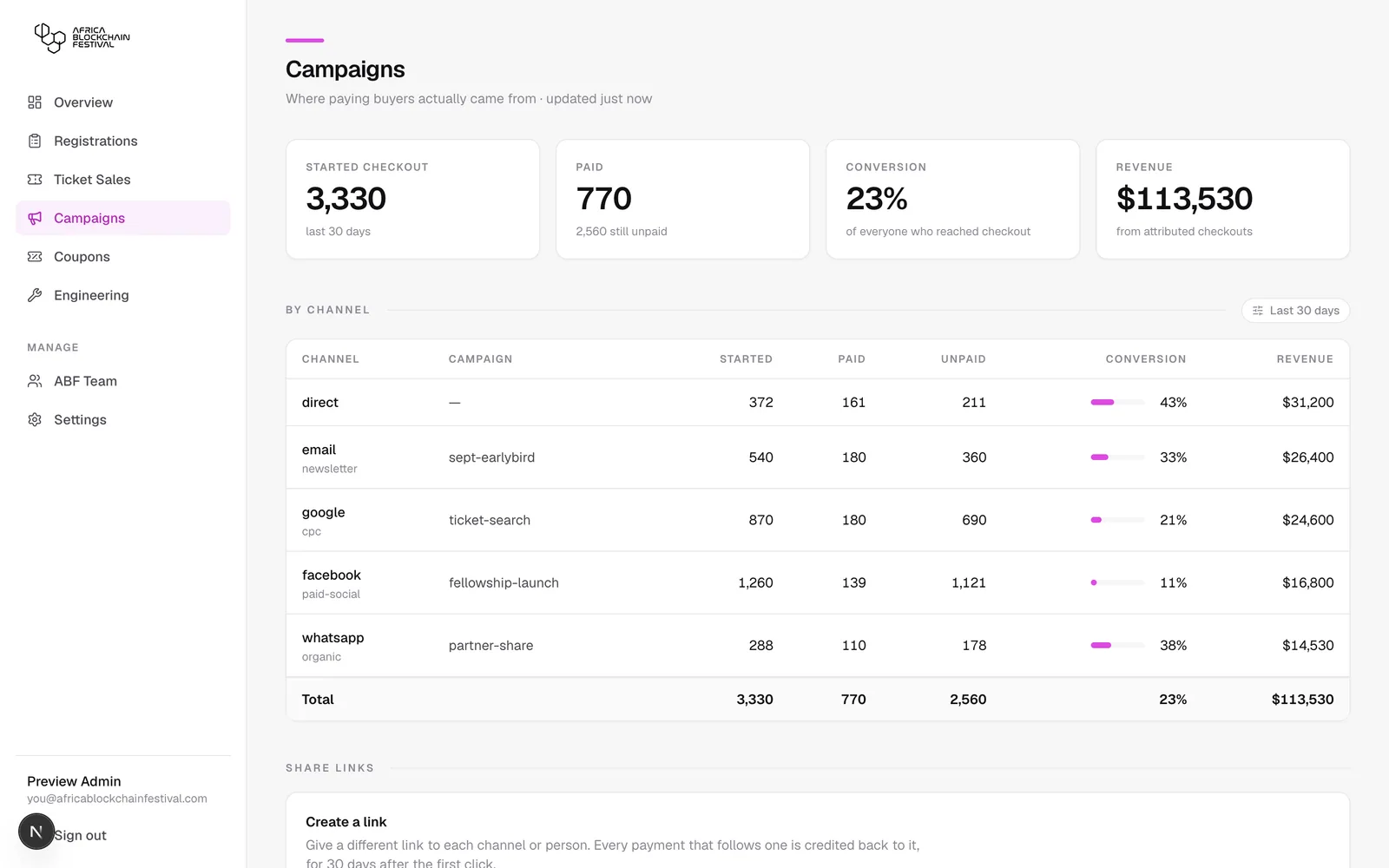
Campaign reporting follows individual share links through to checkout and payment. That lets the team compare the links given to different partners instead of relying only on broad channel labels.
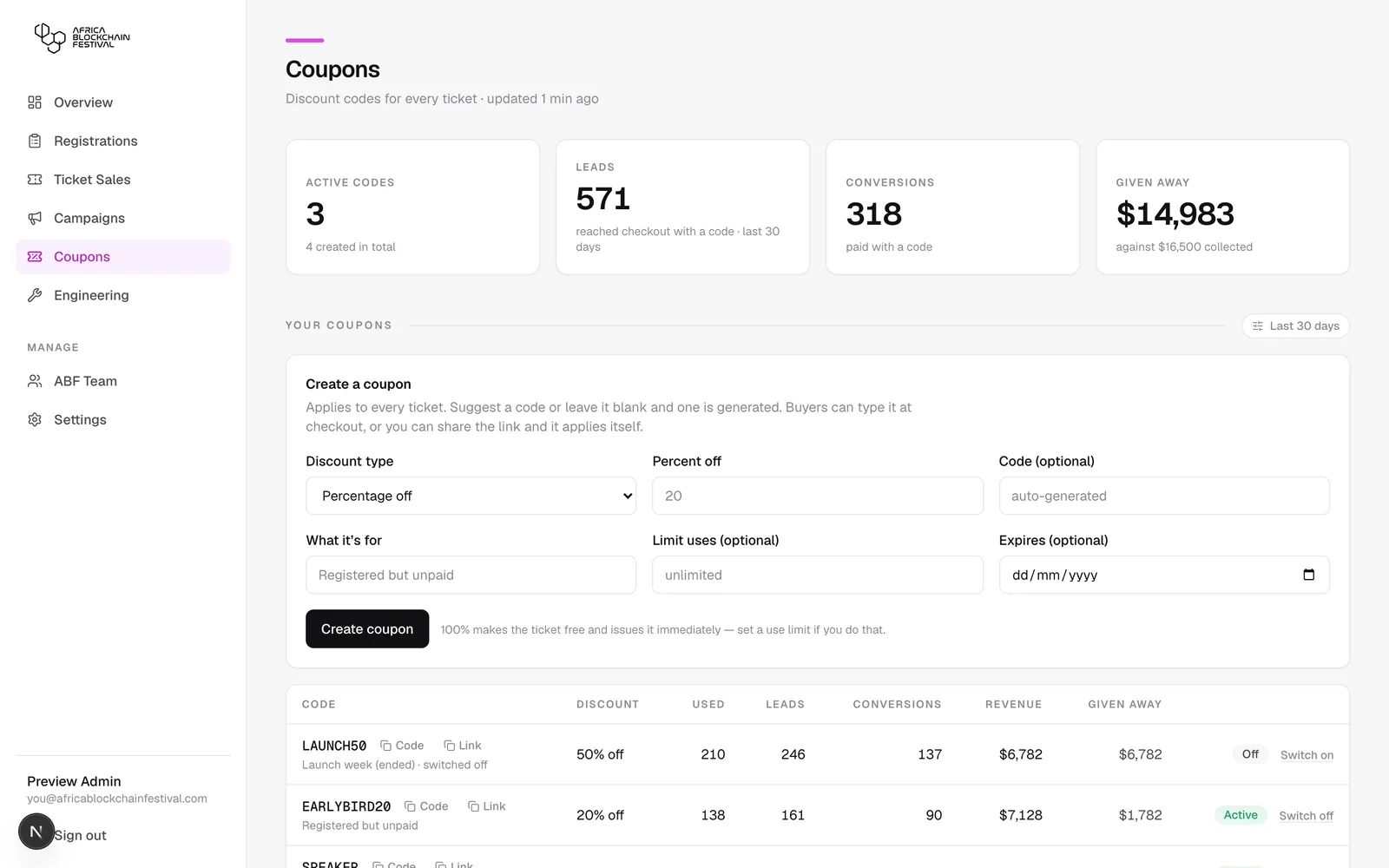
Coupon values are set on the server and redemptions are counted only after payment. Loading states are included on each route so slower services do not make the application appear frozen.
The screens below run on the application’s own preview data rather than live festival figures, because the dashboard sits behind a login and holds real registrant details.
Separate journeys
Sponsor information and ticket sales have distinct routes through the site.
Three languages
English, French and Swahili content uses the same page templates.
Easy to update
The event team manages speakers, partners, ticket tiers and travel content in WordPress.
• Outcome
I was retained for the 2026 edition after the first launch. The organisers report that the 2025 edition secured close to $100,000 in sponsorship, with the website used during partner outreach. The same content structure now supports a second campaign.
Live Website